high value etch critical reactive ion etching workflows?

Core Concepts of ionized etching across chip production. This operation exploits ionic medium to finely ablate structural compounds for precise patterning during microelectronics crafting. By regulating process variables like plasma constituents, current amplitude, and confined pressure, the chemical removal speed, substance discrimination, and structural anisotropy can be specifically adjusted. Energetic ion etching has transformed advanced electronics production, transducers, and state-of-the-art equipment.
- As well, plasma etching is commonly used for subjects related to optics, life sciences, and material sciences.
- Numerous forms of plasma etching exist, including reactive ion etching (RIE) and inductively coupled plasma etching (ICP), each with distinct benefits and downsides.
The multifaceted characteristics of plasma etching depend on a complete grasp of the primary natural laws and molecular reactions. This review seeks to offer a exhaustive summary of plasma etching, incorporating its key points, several categories, applications, profits, drawbacks, and evolutionary tendencies.
Advanced Riechert Etchers for Microfabrication
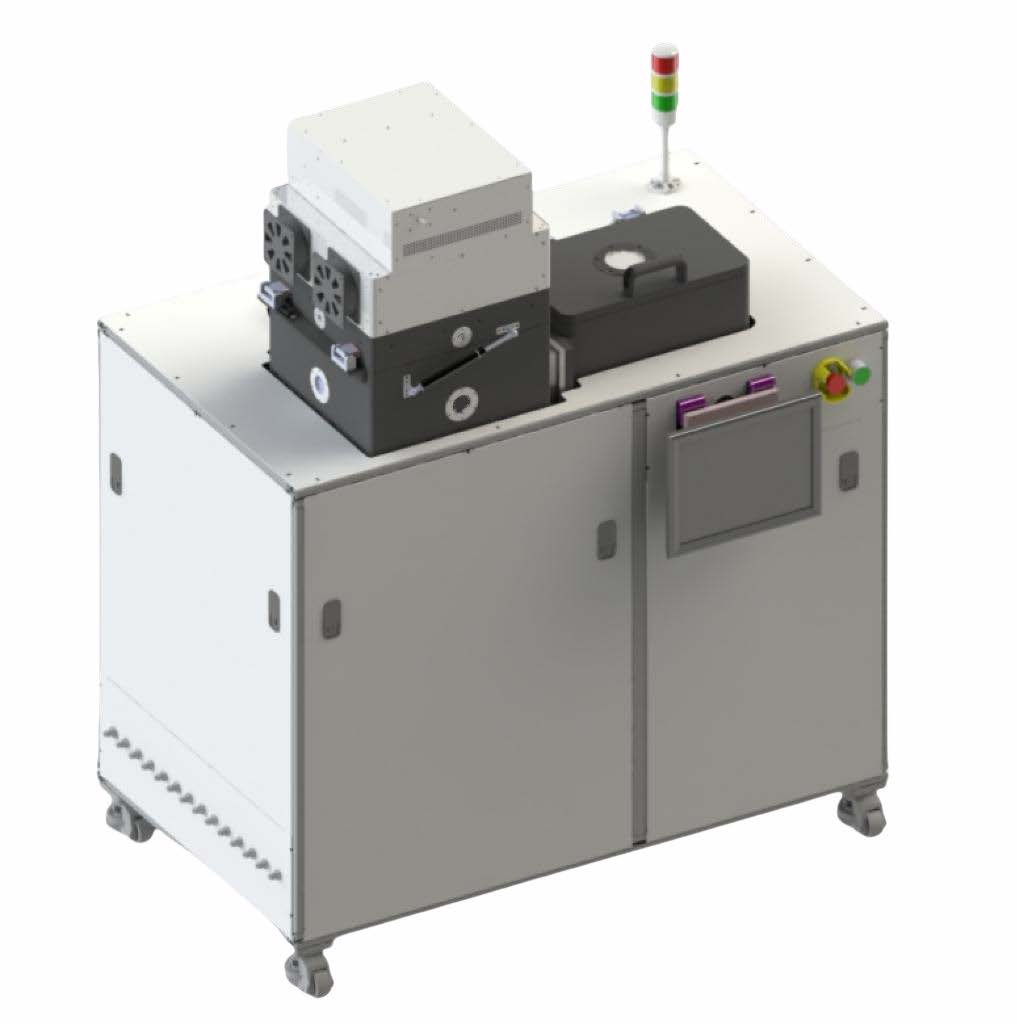
On the subject of precision engineering, Riechert etchers distinguish themselves as a pivotal equipment. These novel devices are noted for their impressive correctness, enabling the creation of sophisticated designs at the nanometer proportion. By employing state-of-the-art etching methods, Riechert etchers provide precise command of the manufacturing sequence, leading to high-quality outcomes.
The scope of Riechert etchers embraces a comprehensive range of territories, such as digital devices. From manufacturing microchips to designing pioneering medical gadgets, these etchers serve an important function in directing the evolution of technology . With devotion to quality, Riechert pioneers norms for exact microfabrication.
RIE Key Concepts and Utility
Reactive ion etching acts as a important technique in microelectronic creation. RIE utilizes a amalgamation of ions and reactive gases to excise materials with exact targeting. This process consists of bombarding the material base with powerful ions, which affect the material to form volatile evaporated products that are then transported by a evacuation process.
RIE’s expertise in profile anisotropy makes it especially useful for producing fine configurations in silicon chips. Applications of RIE cover the development of semiconductor valves, electronic packages, and optical components. The technique can also form narrow slots and vertical passages for high-capacity storage.
- Processes using RIE offer exact regulation over material ablation and target specificity, enabling the production of precise geometries at tight accuracy.
- A broad range of reactive gases can be used in RIE depending on the substrate and etching features sought.
- The directional quality of RIE etching permits the creation of upright boundaries, which is essential for certain device architectures.
Improving Plasma Anisotropy via ICP
Coupled plasma etching has developed as a important technique for fabricating microelectronic devices, due to its exceptional capacity to achieve high anisotropy and material selectivity. The meticulous regulation of operational factors, including plasma power, reactive gas blends, and plasma pressure, enables the accurate control of pattern formation speeds and pattern geometries. This adjustability permits the creation of refined structures with limited harm to nearby substances. By fine-tuning these factors, ICP etching can substantially curb undercutting, a frequent complication in anisotropic etching methods.
Comparative Analysis of Plasma Etching Methods
Advanced plasma removal techniques are extensively used in the semiconductor realm for fabricating fine patterns on substrates. This exploration investigates various plasma etching practices, including plasma-enhanced chemical vapor deposition (PECVD), to determine their suitability for different compounds and intentions. The study identifies critical elements like etch rate, selectivity, and surface morphology to provide a broad understanding of the strengths and weaknesses of each method.
Optimizing Plasma Conditions for Better Etch Performance
Ensuring optimal etching performance levels in plasma techniques necessitates careful setting modification. Elements such as power supply, reactant proportioning, and pressure condition materially govern the surface modification rate. By precisely adjusting these settings, it becomes realistic to enhance result robustness.
Understanding Chemical Mechanisms in RIE
Energetic ion chemical etching is a primary process in microfabrication, which requires the implementation of reactive ions to carefully ablate materials. The central principle behind RIE is the association between these highly energetic ions and the substrate exterior. This reaction triggers chemical processes that decompose and eliminate particles from the material, resulting in a planned arrangement. Typically, the process engages a combination of etching compounds, such as chlorine or fluorine, which get electrically charged within the plasma vessel. These energetic ions attack the material surface, producing the material degradation reactions.Effectiveness of RIE is contingent upon various conditions, including the class of material being etched, the selection of gas chemistries, and the operating conditions of the etching apparatus. Precise control over these elements is vital for attaining high-quality etch profiles and avoiding damage to bordering structures.
Controlling Etch Profiles in ICP Systems
Maintaining true-to-design and uniform designs is key for the completion of several microfabrication tasks. In inductively coupled plasma (ICP) removal systems, management of the etch design is paramount in specifying extents and contours of elements being engineered. Principal parameters that can be tuned to impact the etch profile involve process gas composition, plasma power, sample temperature, and the hardware structure. By thoughtfully regulating these, etchers can engineer forms that range from equally etching to directional, dictated by predefined application conditions.
For instance, strongly directional etching is commonly targeted to create deep channels or vertical connections with distinct sidewalls. This is obtained by utilizing elevated halide gas concentrations within plasma and sustaining decreased substrate temperatures. Conversely, isotropic etching forms smooth profiles owing to the regular three-dimensional character. This style can be advantageous for broad substrate processing or texturing.
Moreover, modern etch profile techniques such as deep reactive ion enable the fabrication of highly accurate and high, narrow features. These approaches generally need alternating between treatment stages, using a amalgamation of gases and plasma conditions to realize the planned profile.
Understanding essential drivers that affect etch profile shaping in ICP etchers is essential for fine-tuning microfabrication operations and fulfilling the planned device functionality.
Advanced Etching Procedures for Semiconductors
Plasma etching is a essential strategy employed in semiconductor assembly to surgically cleanse substances from a wafer top. This strategy implements high-energy plasma, a blend of ionized gas particles, to ablate particular areas of the wafer based on their substrate characteristics. Plasma etching facilitates several benefits over other etching approaches, including high pattern accuracy, which assists with creating profound trenches and vias with reduced sidewall alterations. This fine control is key for fabricating state-of-the-art semiconductor devices with layered arrangements.
Implementations of plasma etching in semiconductor manufacturing are broad. It is leveraged to build transistors, capacitors, resistors, and other core components that constitute the cornerstone of integrated circuits. In addition, plasma etching plays a crucial role in lithography systems, where it boosts the spot-on formatting of semiconductor material to outline circuit layouts. The superior level of control offered by plasma etching makes it an critical tool for state-of-the-art semiconductor fabrication.
Advanced Directions in Etching Technology
Cutting-edge plasma etching consistently advances, driven by the amplified icp rie etching pressure on improved {accuracy|precision|performance