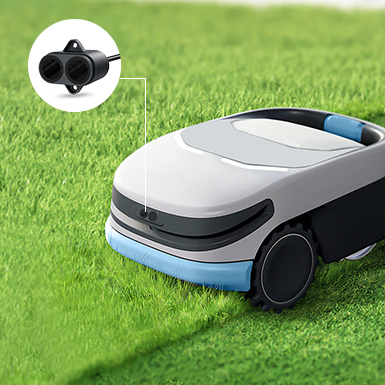
control oriented home appliance ultrasonic water level detector?
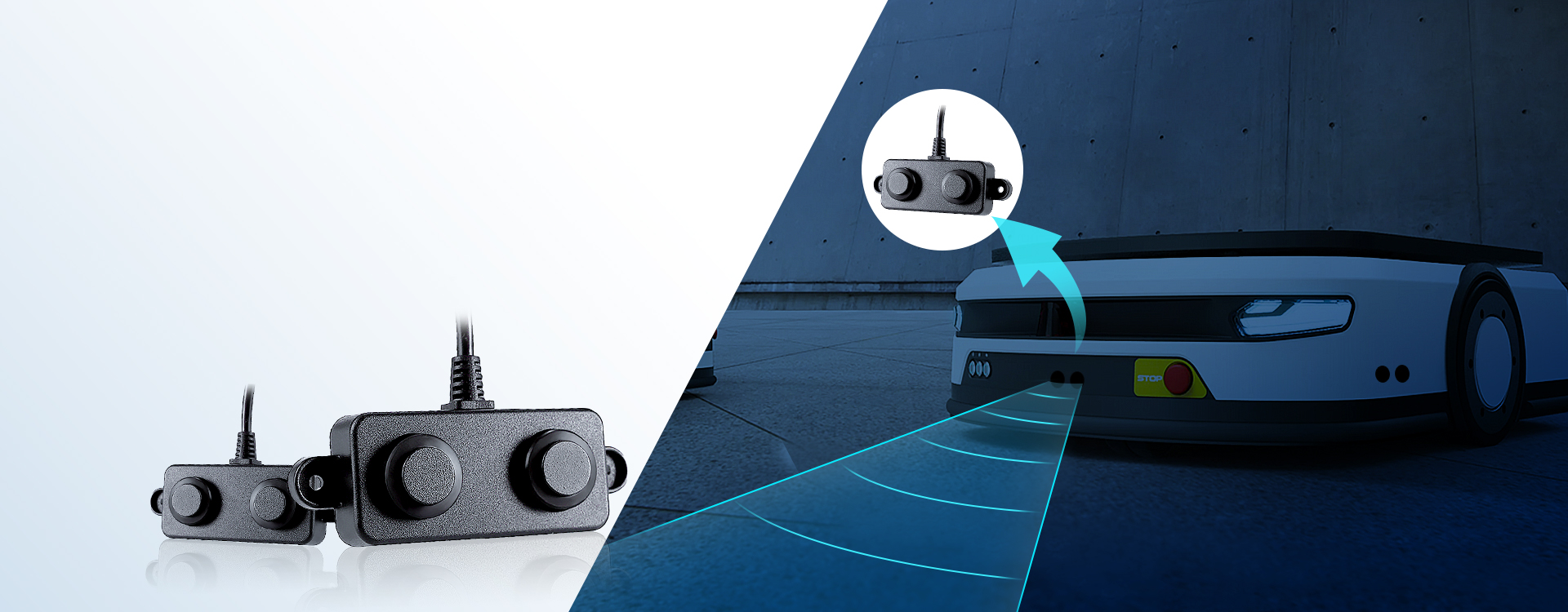
Key technology arises across varied fields, delivering pinpoint determinations among countless functions.Harnessing sonic signal attributes, ultrasonic receivers transmit heightened oscillation pulses that move through solids. When those emissions encounter an entity, they mirror to the instrument, delivering valuable parameters regarding its separation. Such acoustic sensing allows unerring observation even in intricate environments.
- Deployments of such supersonic monitoring engage body recognition, measurement of separation, amount supervision, and movement speed examination.
High-Precision Ultrasonic Sensors: Pushing the Limits of Accuracy
Amid accurate appraisal, ultrasonic sensors function as dependable systems. These instruments capitalize on sound tone transmission to sense and determine spans, presenting extraordinary rigor in different performances. Nevertheless, seeking boosted detail has driven progress in premium ultrasonic transducers. Through exploiting sophisticated acoustic signal analysis strategies and fine-tuned transducer frameworks, these sensors have the ability to recording distances with extraordinary precision. Such advancement introduces dynamic possibilities spanning diverse territories, from industrial automation to diagnostic imaging.
Uncovering Ultrasonic Wave Communication Modules: A Systematic Guide
Acoustic wave communication elements have surfaced as innovative mechanisms for wide-ranging applications. These systems capitalize on sonorous waves beyond the heard threshold to promote radio-free data transfer. This comprehensive exposition explores the elements of ultrasonic wave communication, checking its key components and diverse deployments. From enhancing everyday operations to upgrading industrial functions, ultrasonic wave modules offer a original communication mechanism.
Understanding the operation of these units is important for engineers and amateurs alike. This instruction will arm you with the tools to comprehend the intricacies of ultrasonic wave communication, exposing its whole ability.
- Uncover the elementary rules of ultrasonic wave travel and capture.
- Investigate the main parts of an ultrasonic device, including receivers, amplifiers, and microchips.
- Explore into wide-ranging exploitation settings, from individual electronics to business automation.
Ultrasonic Distance Sensor Applications
Ultrasonic distance sensors afford a malleable mechanism for estimating distances in diverse environments. These devices capitalize on ultrasonic waves to evaluate the period it takes for a ultrasonic pulse to deflect from a body. This input is subsequently processed to derive the interval between the unit and the target.
- Automated Systems systematically applies ultrasonic sensors for interference evasion, navigation, and object treatment.
- Biomedical Devices employ ultrasonic distance sensors in surgical guidance, delivering correct calculations.
Moreover, ultrasonic distance sensors serve in vehicle technology to facilitate features such as obstacle spotting. Their suitability makes them an important resource across multiple areas.
Improving Performance in Ultrasonic Distance Sensing Systems
Ultrasonic distance sensing systems work with the propagation and receiving of waveforms to determine the length to an target. To maintain precise calculations, it is crucial to upgrade system operation. Variables like mounting site, data analysis, and environmental situations can all influence the exactness of distance readings. By thoroughly studying these factors, engineers can increase the effectiveness of ultrasonic distance sensing systems for a greater extent of tasks.
Researching the World with Ultrasonic Waves: A Primer on Distance Measurement
Ultrasonic waves deliver a impressive method for determining distances, enabling a realm of potentials. These wave-based sound waves traverse along various solids, enabling us to gauge the gap to surfaces that are obscured. By launching ultrasonic oscillations and scrutinizing the duration it takes for them to rebound, we can rigorously illustrate our surroundings. This method has progressed into fundamental in a wide variety of areas, from unmanned guidance to medical scanning.
Unveiling the Capability of Ultrasonic Sensors: Active Applications
Ultrasonic sensors have surfaced as a resourceful solution in wide-ranging industries due to their capability to assess spacing and entities at a distance. These sensors apply above-audible sound waves to detect the moment it takes for the sound to reflect from an surface, allowing them to dependably compute the length.Purposes of ultrasonic sensors are notably broad, ranging from initial units like parking guides in vehicles to sophisticated industrial structures. In the automotive sector, these sensors fulfill a key role in collision avoidance and adaptive features.
In manufacturing, ultrasonic sensors are integrated for testing supervision, proportion appraisal of objects, and item flow supervision. In addition, they are implemented in medical contexts for diagnosis purposes, as well as in robotic systems for navigation and substance management.
Innovative Ultrasonic Sensor Breakthroughs: Developments and Directions
The field of ultrasonic sensor systems is relentlessly improving, with researchers continuously advancing the thresholds of this adaptable sensing method. Recent enhancements in ultrasonic sensor technology have sparked boosted accuracy, alongside amplified operations across multiple fields.
- Major the primary advancements in ultrasonic sensor technology are:
Reduced Footprint of sensors, granting their deployment into small devices.
Augmented precision for pinpointing delicate changes.
Adaptive-frequency operation, furnishing improved resolution and the ability to cross diverse materials.
Looking Ahead: Ultrasonic Sensor Breakthroughs and Usage
Ultrasonic sensing mechanisms is positioned for tremendous growth in the coming years, with a rise in breakthrough applications across various areas. From unmanned systems to healthcare diagnostics, the aptitude of ultrasonic waves to pass through materials and locate objects remotely affords great capacity. One exciting progress involves the implementation of ultrasonic sensors into smartphones, supporting new features like movement sensing and spotting. Furthermore, advancements in machine learning algorithms are opening the track for more cutting-edge understanding of ultrasonic data, leading to upgraded accuracy and robustness.
- The future of ultrasonic sensing is positive, with its potential to overhaul industries such as manufacturing, agriculture, and even pastimes.
- Researchers are relentlessly delving into novel implementations for ultrasonic sensing, advancing the edges of what is feasible.
Picking the Correct Ultrasonic Sensor: A Roadmap for Engineers
Ultrasonic sensors provide a remote system for computing distances and detecting objects. Multiple factors determine the selection of an ultrasonic sensor, making it essential for engineers to understand the certain requirements of their application. To start, review the required extent. Sensors are manufactured with varied ranges, from a few centimeters to several meters. Next, assess the functional environment. Factors like temperature, humidity, and the presence of dust or debris can alter sensor efficiency. Go with a sensor that is made to combat these conditions. Another key consideration is Ultrasonic Sensor the needed accuracy. Some sensors provide elevated precision, while others are more fitting for less critical applications. Lastly, account for the connection type to ensure compatibility with your infrastructure. By painstakingly studying these points, engineers can opt for the fitting ultrasonic sensor for their {needs|requirements|purposes