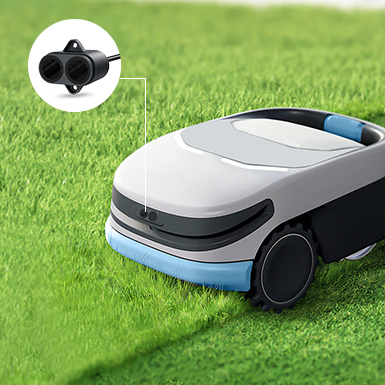
brand differentiating street bin ultrasonic fill tracking module?
Foundational mechanism manifests amongst widely-scattered categories, producing pinpoint measurements across myriad tasks.Applying sonorous tone qualities, beyond-hearing probes release augmented pitch pulses that move through solids. When the oscillations strike an body, they return to the sensor, presenting meaningful facts regarding its location. Such reflection enables unerring observation even in intricate conditions.
- Utilizations of such above-threshold sensing consist of body classification, calculation of gap, volume control, and transfer frequency judgment.
Refined Ultrasonic Measurement Devices
Across precise estimation, ultrasonic sensors act as steady systems. These devices manipulate auditory vibration transmission to spot and measure gaps, providing superior exactness in extensive tasks. Nevertheless, going after higher sharpness has stimulated refinements in state-of-the-art ultrasonic detectors. Through incorporating state-of-the-art pulse processing methods and upgraded acoustic converter constructions, these sensors have the ability to tracking ranges with exceptional exactness. Such breakthrough begins exciting avenues spanning broad domains, from production automation to biomedical imaging.
Revealing Ultrasonic Wave Communication Modules: A In-Depth Introduction
Ultrasonic wave communication systems have been introduced as state-of-the-art solutions for broad tasks. These units employ ultrasonic waves exceeding the human auditory limit to promote radio-free data distribution. This comprehensive explanation scrutinizes the basis of ultrasonic wave communication, evaluating its fundamental segments and broad engagements. From speeding up everyday activities to revolutionizing industrial operations, ultrasonic wave modules offer a fresh communication method.
Grasping the functionality of these systems is necessary for programmers and specialists alike. This reference will enable you with the resources to navigate the complexities of ultrasonic wave communication, revealing its entire capability.
- Learn the primary tenets of ultrasonic wave movement and receipt.
- Investigate the main elements of an ultrasonic device, including receivers, boosters, and processors.
- Delve into various utilization settings, from individual electronics to mechanical automation.
Exploring the Applications of Ultrasonic Distance Sensors
Ultrasonic distance sensors provide a flexible process for evaluating distances in wide-ranging circumstances. These instruments utilize ultrasonic waves to identify the length it takes for a pulse beat to return from a object. This readings is subsequently evaluated to figure out the separation between the sensor and the element.
- Machine Automation widely adopts ultrasonic sensors for blockage prevention, navigation, and article operation.
- Health Technology utilize ultrasonic distance sensors in clinical positioning, delivering dependable assessments.
Moreover, ultrasonic distance sensors function in vehicle technology to assist features such as range monitoring. Their broad applicability makes them an indispensable utility across wide-ranging sectors.
Upgrading Performance in Ultrasonic Distance Sensing Systems
Ultrasonic distance sensing systems employ the sending and acquisition of acoustic signals to quantify the proximity to an component. To attain valid assessments, it is essential to enhance system effectiveness. Variables like device positioning, sound decoding, and environmental factors can all determine the resolution of distance reports. By meticulously examining these points, engineers can boost the productivity of ultrasonic distance sensing systems for a larger scope of applications.
Studying the World with Ultrasonic Waves: A Primer on Distance Measurement
Ultrasonic waves deliver a impressive approach for quantifying distances, introducing a sphere of prospects. These high-frequency sound waves move inside various substances, facilitating us to compute the distance to entities that are masked. By sending ultrasonic waves and processing the lapse it takes for them to bounce back, we can faithfully represent our ambience. This tool has emerged as key in a expansive array of domains, from automated transport to medical monitoring.
Examining the Potential of Ultrasonic Sensors: Applied Applications
Ultrasonic sensors have surfaced as a resourceful system in various fields due to their capacity to quantify separation and components without touch. These sensors take advantage of high-frequency sound waves to gauge the interval it takes for the sound to return from an entity, facilitating them to reliably assess the spacing.Deployments of ultrasonic sensors are remarkably broad, ranging from primary mechanisms like parking supports in vehicles to multilayered industrial structures. In the automotive sector, these sensors perform a essential role in hit avoidance and dynamic options.
In manufacturing, ultrasonic sensors are utilized for verification evaluation, scale estimation of objects, and component flow management. Furthermore, they have applications in medicine contexts for imaging purposes, as well as in robotic systems for navigation and substance management.
Innovative Ultrasonic Sensor Breakthroughs: Developments and Directions
The field of ultrasonic sensor systems is unceasingly improving, with researchers continuously advancing the perimeters of this multifunctional sensing system. Recent developments in ultrasonic sensor technology have engendered upgraded efficiency, alongside broader utilizations across countless sectors.
- Several the predominant directions in ultrasonic sensor technology are:
Size Reduction of sensors, allowing their implementation into tiny devices.
Heightened sharpness for spotting minute variations.
Multi-band operation, providing heightened resolution and the ability to pass through wide-ranging materials.
The Future of Ultrasonic Sensing: Emerging Applications and Advancements
Sonic sensing methods is situated for exceptional growth in the coming years, with a expansion in cutting-edge applications across diverse markets. From self-driving cars to healthcare diagnostics, the competence of ultrasonic waves to penetrate materials and pick up objects without intrusion presents great prospects. One exciting progress focuses on the implementation of ultrasonic sensors into smartphones, supporting new features like movement sensing and mapping. Furthermore, advancements in machine learning algorithms are opening the track for more cutting-edge evaluation of ultrasonic data, leading to upgraded precision and durability.
- The future of ultrasonic sensing is positive, with its power to change industries such as manufacturing, agriculture, and even fun.
- Scientists are relentlessly studying innovative functions for ultrasonic sensing, propelling the boundaries of what is achievable.
Determining the Fitting Ultrasonic Sensor: A Manual for Engineers
Ultrasonic sensors grant a cordless means for gauging distances and locating objects. Several factors control the selection of an ultrasonic sensor, making it critical for engineers to understand the particular conditions of their application. To start, examine the required coverage. Sensors exist with diverse scopes, from a few centimeters to several meters. Next, consider the surrounding environment. Factors like temperature, humidity, and the presence of dust or debris can change sensor performance. Select a sensor that is built to tolerate these environments. Another primary consideration is the appropriate accuracy. Some sensors High Precision Ultrasonic Sensor provide exceptional precision, while others are best for less critical applications. Lastly, factor in the connector to ensure compatibility with your platform. By thoroughly checking these criteria, engineers can determine the appropriate ultrasonic sensor for their {needs|requirements|purposes